
Review of core issue:
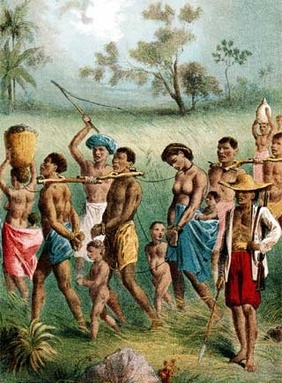
Slavery is a central theme in the book. The book explores the complicity of Africans in enabling slavery, slavery perpetuated by the colonial masters, and the institutionalised racism and oppression in our society today.
The book traces the lineages of two sisters who are sold into slavery: Effia and Esi, the former through marriage and the latter as a prisoner of war.
Effia lives in the governor's castle, and below the castle, slaves are trapped in the dungeon awaiting shipment to America. Her husband, the governor, never talks about the slaves who look like his wife, and Effia feigns ignorance. In this context, she was an enabler as she chose not to want to know what was happening in her own compound.
Chief Abeeku conducted trade with the British, dealing in slaves. This goes to show the complicity of Africans in the slave trade that resulted in death, suffering, and the separation of families.
Esi’s daughter, Ness, worked as a slave in a cotton field in Mississippi, where she compared her stay there as “In hell, the sun scorched cotton, it almost burned the palm of your hands to touch it”(page 74). She describes her master at the farm as “the Devil”. This depiction emphasizes the suffering brought about by slavery.
H was imprisoned for nine years for “studyin’ a white woman” (page 158) and he is leased to work in a coal mine, while working out his sentence. At the mine, he is in constant fear of death and endures brutal beatings.
How does the issue resonate with current societal themes?
In today’s society, systemic racism and subtle forms of slavery have persisted. In Kenya, thousands of young people are recruited to go and work each year in the Gulf countries, where they are treated like second-class human beings. They are denied basic rights and freedoms, forced by their economic situations to endure subtle slavery just to eke a living.
In the United States, the death of George Floyd, an unarmed black man at the hands of a white police officer, is one example of the systemic racism that has persisted since the seventeenth century to date.